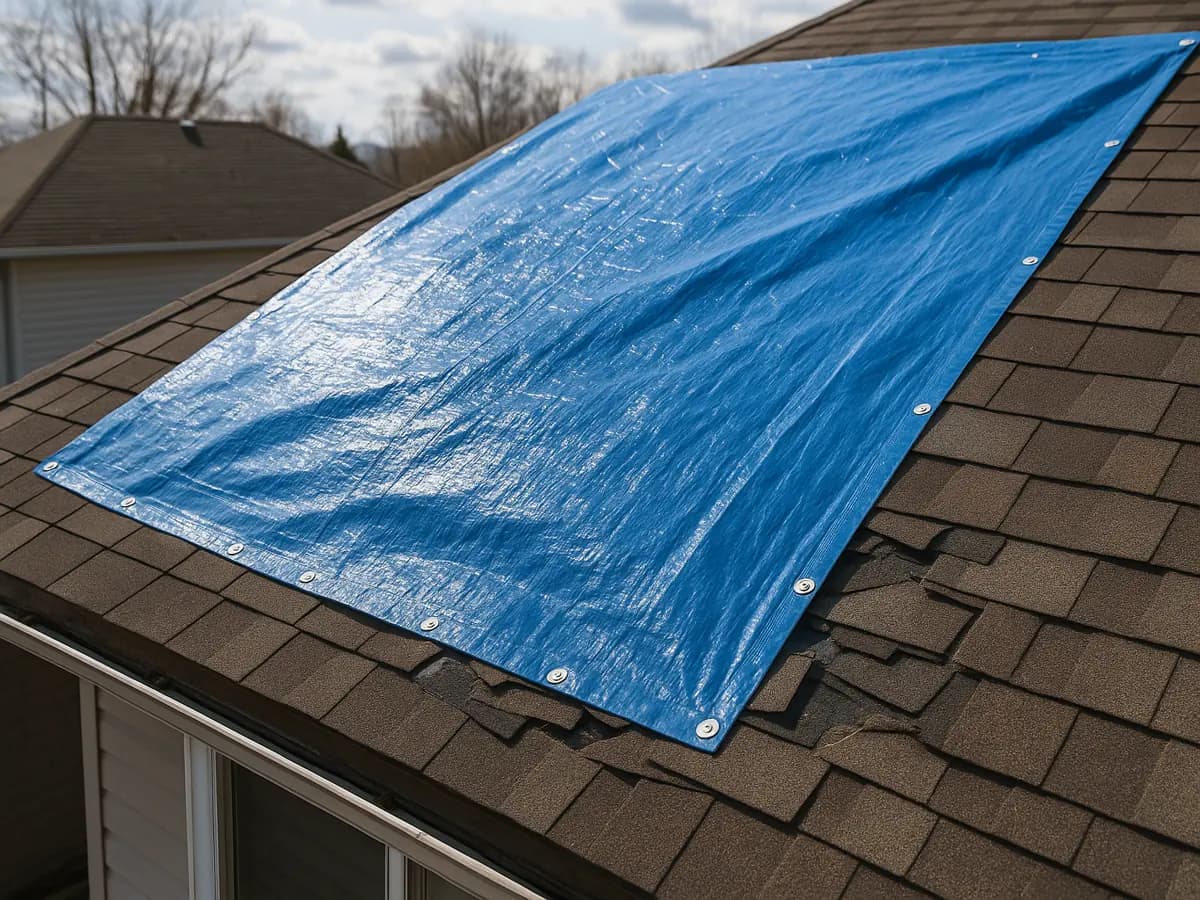
Rapid emergency roof repair after storms — temporary tarping and permanent fixes to stop water damage.
What emergency roof repair involves
Storms, fallen branches and sudden leaks don't wait for good weather. Emergency roof repair stops active water damage fast: we can tarp and secure the roof to protect the interior, then return to complete a proper permanent repair once conditions allow. Acting quickly limits damage to insulation, drywall and belongings, and a documented inspection helps support an insurance claim.
What's included
- Rapid response
- Temporary tarping
- Permanent repair follow-up
- Free written quote
Built for the Canadian climate
We treat emergencies as exactly that — the priority is stopping the water, then doing the repair right. Across Canada, snow load, ice dams and freeze-thaw cycles are hard on roofs, so we detail every job for the weather it will actually face. After a storm we can tarp and dry-in the roof quickly to stop water reaching the interior, then return for a permanent repair once conditions are safe and the full extent of the damage is clear in daylight.
What counts as a roofing emergency
Some roof problems cannot wait for a scheduled appointment. Active leaks during a storm, shingles or sections torn off by high wind, a tree limb through the roof, or an ice dam forcing water under the shingles and into the ceiling all need a fast response to stop water entering the building. The first goal is always to make the roof watertight and protect the interior.
Our emergency response
When you call, we work to get the roof temporarily secured quickly — tarping the opening, sealing the breach, and stopping the water — so the damage stops spreading. Once the weather clears and the situation is stable, we return to inspect fully and complete the permanent repair, with everything documented so it is clear what was emergency stabilization and what is the lasting fix.
Working with your insurance
Storm and impact damage is often covered by home insurance. We document the damage with photographs, provide a clear written scope and quote, and give you the paperwork your adjuster needs. Knowing the difference between an emergency tarp and the permanent repair — and having both documented — makes the claim process far smoother.
Stopping the water first
In a roofing emergency the priority is never the finished repair — it is stopping the water from entering the building and causing further damage. We work to get the roof temporarily watertight as quickly as conditions safely allow, securing tarps over openings, sealing breaches, and clearing the immediate hazard. Only once the building is protected and the weather has settled do we move to the permanent fix, so the urgent damage stops while the lasting repair is done properly rather than rushed in poor conditions.
After the storm: inspection and permanent repair
Once the emergency is stabilized we complete a full inspection, because storm damage is often more extensive than the obvious breach. Wind that lifts one section usually loosens others; an impact that punches through in one place can crack shingles across a wider area. We document everything, separate the emergency stabilization from the permanent repair, and give you a clear written scope so that both you and your insurer understand exactly what was done and what the lasting repair involves.
A roofing emergency, handled the right way
When a roof fails suddenly — a storm tearing off shingles, a branch through the deck, an ice dam forcing water into the ceiling — the response has to do two things in the right order: stop the water now, and fix the roof properly afterward. Rushing a permanent repair in the middle of a storm, in poor light and worse footing, is how mistakes get made; ignoring the breach until a scheduled appointment is how a small failure becomes interior damage. We do it in the correct sequence. First we make the roof temporarily watertight as quickly as conditions safely allow, securing the opening so the damage stops spreading and the building is protected. Then, once the weather has settled, we return to inspect the full extent of the damage — which is usually wider than the obvious breach — and complete the permanent repair to the same standard as any planned job. Everything is documented, with the emergency stabilization and the permanent repair clearly separated, so you and your insurer understand exactly what was done at each stage and the claim moves smoothly.
Fast response when the roof cannot wait
Storms do not keep business hours, and neither do the failures they cause. When wind, ice or impact opens your roof, the priority is a fast, safe response to get it watertight before the next band of weather arrives. We move quickly to secure the breach and protect what is below, then follow through with the inspection and permanent repair once it is safe to do the work properly. Quick to stabilize, thorough to finish.
Get a free written quote
Every emergency roof repair project starts with a free, no-obligation written quote based on a real inspection of your roof. We confirm the scope, materials and price before any work begins, and back the work with a workmanship warranty.