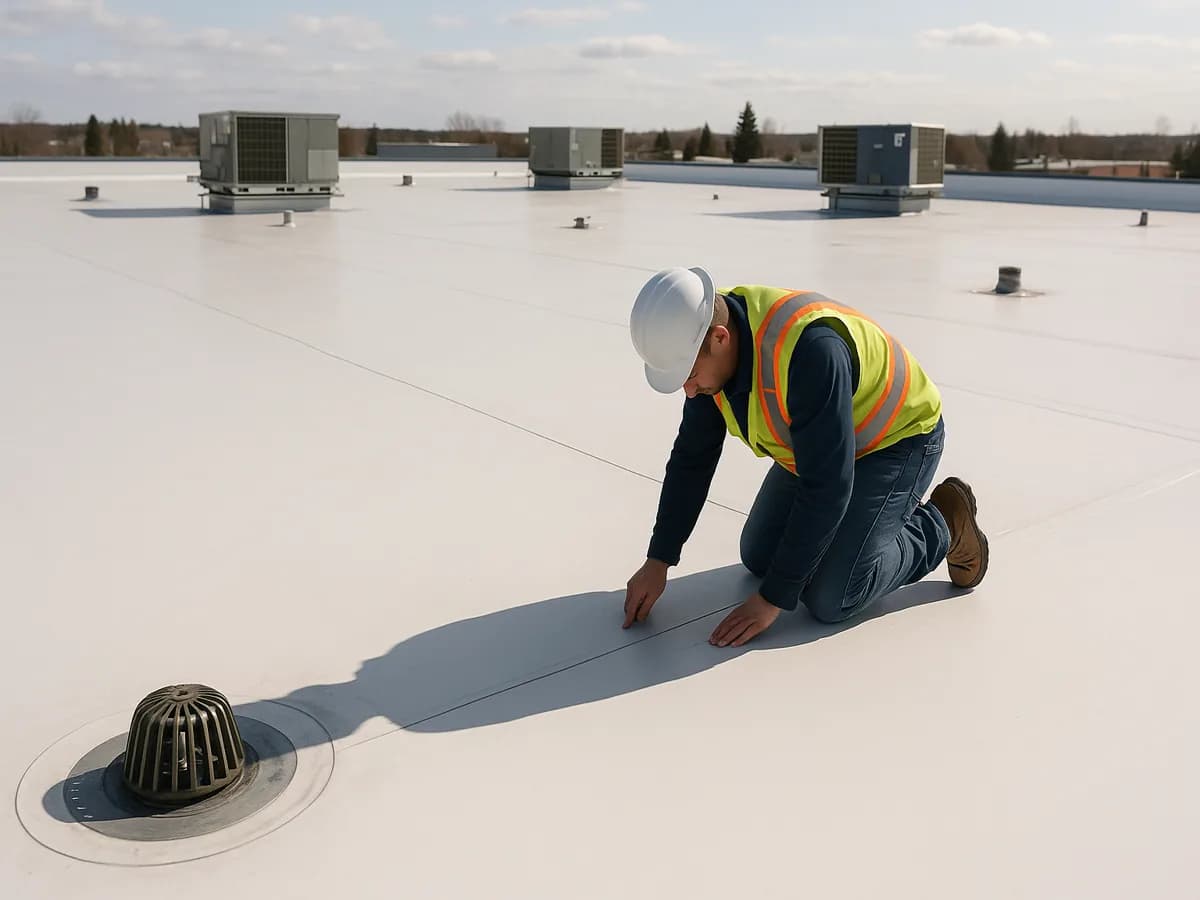
Flat and low-slope roofs are common on commercial buildings, additions, and modern homes, and they bring a different set of maintenance needs than a steep shingle roof. Because water drains slowly across them, small problems can turn into leaks faster. A simple, consistent maintenance routine is the single best way to get full value from a flat roof.
Why flat roofs need closer attention
A sloped roof sheds water and debris by gravity. A flat roof relies on careful design and a sound membrane to move water to drains. When anything interrupts that drainage, water sits and works at any weak point. This is why ponding water, blocked drains, and small membrane cracks deserve quick action on a flat roof.
Keep the drains and scuppers clear
Drainage is everything on a low-slope roof. Leaves, gravel, and debris collect at drains and scuppers and block the flow of water. Clearing them, especially in the fall and after storms, prevents the standing water that shortens a roof’s life. If you consistently see pooled water more than a day or two after rain, the drainage needs professional attention.
Inspect the membrane and seams
The membrane is the waterproof skin of a flat roof, and its seams are the most likely place for failure. During inspections, look for:
- Cracks, blisters, or bubbles in the membrane surface
- Seams that are lifting, splitting, or no longer sealed
- Punctures from dropped tools, foot traffic, or fallen branches
- Soft spots underfoot, which can signal saturated insulation below
Catching a small seam failure early is a minor repair. Letting it run leads to wet insulation and deck rot.
Check the flashing and roof penetrations
Anywhere the roof meets a wall, a curb, a vent, or rooftop equipment, flashing seals the joint. These details are the most common entry points for water on any roof. Make sure flashing is intact, well-sealed, and not pulling away from the surface.
Mind the rooftop traffic
Flat roofs often carry HVAC units, vents, and the occasional service visit. Every footstep and dropped tool is a chance to damage the membrane. Limit unnecessary traffic, and use walk pads in areas that get regular access for maintenance.
Schedule professional inspections
A homeowner or building manager can catch obvious problems, but a professional inspection twice a year, in spring and fall, catches the subtle ones. A roofer can spot early membrane fatigue, failing seams, and drainage issues long before they cause an interior leak.
Act on small problems immediately
The economics of a flat roof reward fast action. A sealed seam or a patched puncture costs little. The water damage from ignoring it, including ruined insulation and a rotted deck, costs far more. Treat every minor flat-roof issue as worth fixing now.
RooFix repairs and maintains flat and low-slope roofs for homes and commercial buildings, and can set up an inspection schedule that keeps your roof watertight for its full service life.
Frequently asked questions
How often should a flat roof be inspected?
Twice a year — spring and fall — plus after major storms. Flat and low-slope roofs hold water longer, so catching a seam or flashing issue early prevents membrane failure.
How long does a flat roof last in Canada?
A well-installed and maintained membrane (EPDM, TPO or modified bitumen) lasts 20–30 years. Standing water, clogged drains and neglected seams are what cut that short.
Keep your flat roof watertight with professional flat roof repair, commercial roofing service, or a quick free quote.